Orthodontics Glasgow

If you are researching Glasgow orthodontics, you are likely looking for a safe, effective way to straighten your teeth and improve your bite. At Michael Kelly Dentistry, we provide orthodontic and teeth straightening treatments for adults and teenagers, including discreet clear aligners.

What Is Orthodontics?

Orthodontic treatments focuse on correcting tooth and jaw alignment. At our dental clinic in Glasgow, this treatment is provided by experienced GDC-registered dentists.

Treatment uses controlled, gradual forces to move teeth into more ideal positions over time. Depending on your needs, this can be achieved with fixed braces or removable clear aligners, such as Invisalign, SureSmile and ClearCorrect.

When You Might Need an Orthodontic Treatment

You may benefit from orthodontic treatment if you have:

  • Crooked or overlapping teeth
  • Gapped teeth
  • A crowded smile that is difficult to clean
  • Bite problems such as overbite, underbite, crossbite or open bite
  • Teeth that do not meet evenly when biting together
  • Jaw discomfort or excess tooth wear caused by misalignment

Straightening your teeth is not only about a dream smile or cosmetic improvement. A well-aligned smile can be easier to clean, helping reduce plaque buildup and supporting long-term oral health.

Teeth Straightening & Orthodontic Services

Crooked, crowded or misaligned teeth can affect both your confidence and your bite. Our orthodontic treatments gently guide your teeth into a more aligned position.

We recommend the most suitable orthodontic option based on your teeth, bite and personal goals. Common treatment options include:

Clear Aligners  

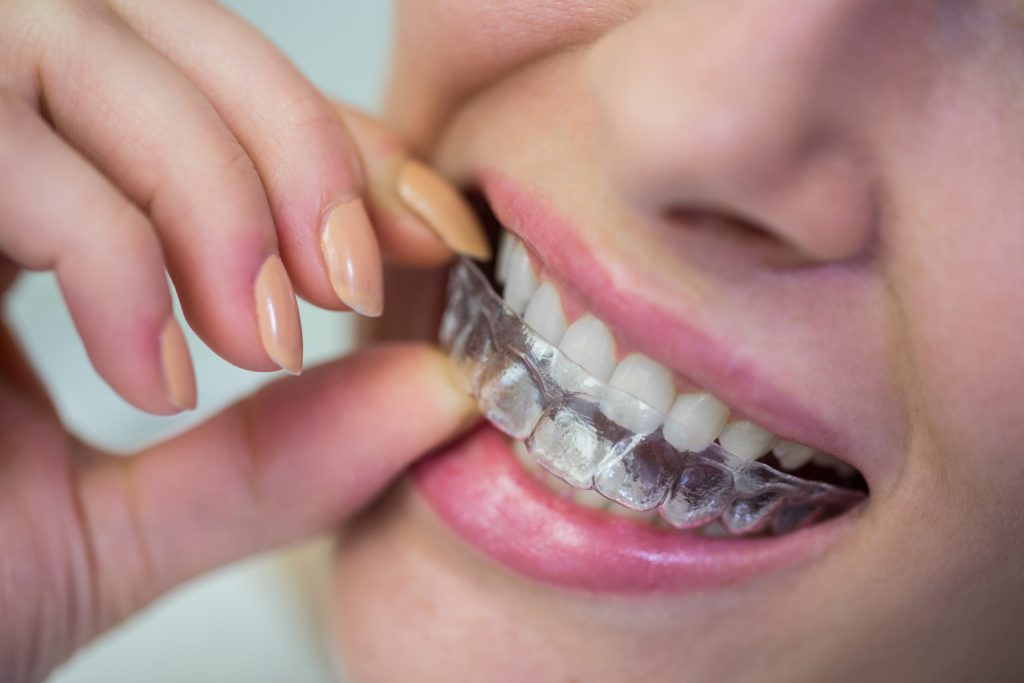
Clear aligners are custom-made, removable, transparent trays that move teeth in small stages using Invisalign or Suresmile. They are more discreet, without the metal brackets of traditional braces.

Aligners must be worn for at least 20–22 hours per day and removed for eating, drinking (except water), and brushing.

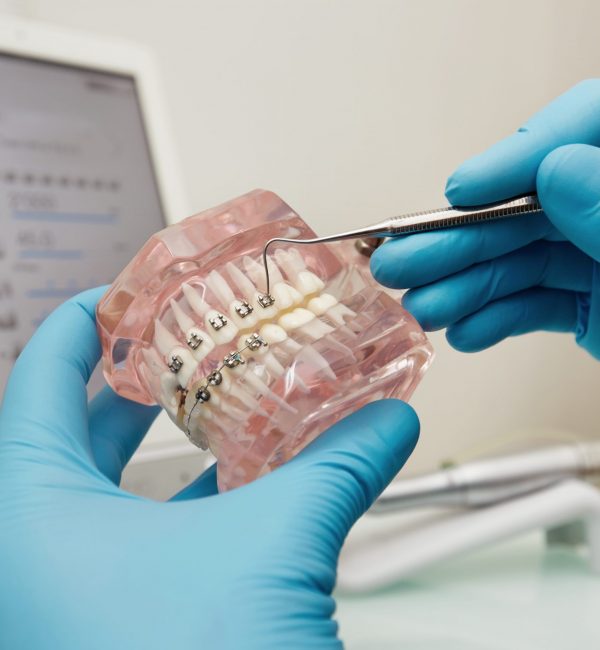
Prosthetics hands while working on the denture, false teeth, a study and a table with dental tools. Dental laboratory.

Fixed Brace Systems 

Discreet fixed brace options use tooth coloured brackets and wires for a more subtle appearance. The wires are adjusted over time to gradually guide teeth into improved alignment.

Minor Alignment Treatments 

Shorter treatment plans are designed for small cosmetic improvements to the front teeth. During your consultation, we explain each option clearly, including expected treatment timelines and daily instructions, so you can make an informed decision.

Differences Between Braces & Clear Aligners

Here’s a quick view of how they compare:

Traditional braces Clear aligners 
Appearance Visible metal or ceramic brackets Near-invisible clear plastic
Removable? No Yes, for eating and brushing
Daily commitment None Worn 20-22+ hrs/day
Complex cases Often suitable for a wider range of movements May be more suitable for mild to moderate cases
Treatment time 12–30 months 6-18 months
Appointments Every 5–8 weeks Every 6–12 weeks
Retainer needed after? Yes Yes
Gum health Comparable to aligners Comparable to fixed braces
NHS available? Yes, where eligible Not routinely

Risks

Aligners and braces carry similar risks:

  • Temporary soreness 
  • Slightly higher risk of decay if oral hygiene slips
  • Teeth drifting back if retainers are not worn after treatment. 
  • Mild root shortening can occur in some cases of orthodontic treatment. This is a recognised and monitored risk.

Your dentist will discuss the risks with you before treatment begins. The most suitable solution for you will depend on your individual clinical needs, lifestyle and the complexity of tooth movement required. A full assessment is needed to determine which treatment may be appropriate.

Benefits of Orthodontic Treatments

Choosing orthodontic care at Michael Kelly Dentistry offers several long-term benefits:

  • A straighter and more balanced smile 
  • Improved bite and more comfortable chewing
  • Easier cleaning and better plaque control
  • May help reduce risk of tooth wear or jaw strain in suitable cases
  • Increased confidence when smiling, speaking and in photos
  • Treatment plans tailored to your lifestyle
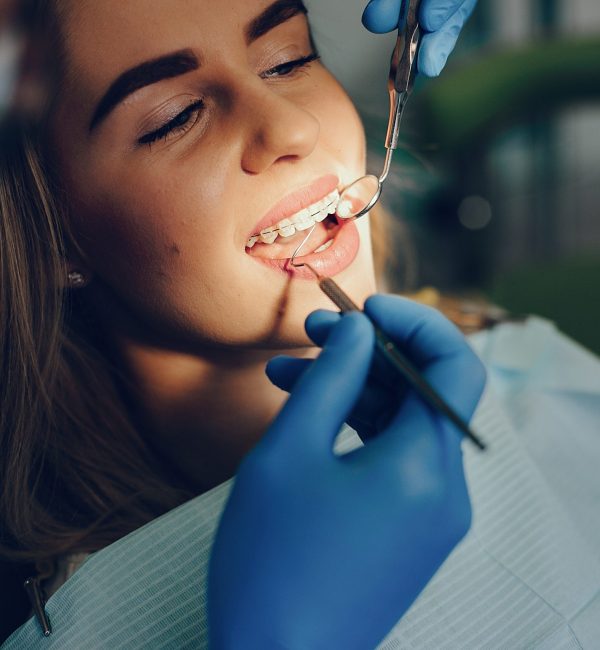
Beautiful lady in the dentist's office. Woman in a uniform

The Orthodontics Process

Your orthodontic journey at Michael Kelly Dentistry usually includes the following steps:

  1. Consultation – Discussion of your concerns, clinical examination and digital scans or photographs.
  2. Treatment Planning – Detailed analysis of your bite and tooth positions, followed by a personalised treatment plan
  3. Scanning & Result Preview – Using the Dentsply Suresmile system, we create a digital model of your teeth to show your expected results before braces or aligners are fitted. This routine preview helps you see how your smile could look after treatment. Prices start from £60 per month.
  4. Braces or First Aligners – Your braces are fitted, or your first set of aligners is provided with full instructions.
  5. Review Visits – Regular check-ins to monitor progress, make adjustments or supply new aligners.
  6. Retention – At the end of treatment, retainers are used to keep your teeth in their new positions.

We focus on comfort and clear communication at every stage, so you always feel supported and well-informed.

Our Approach to Orthodontics in Glasgow

At Michael Kelly Dentistry, we combine clinical experience with a calm, friendly environment to make orthodontic treatment as smooth and stress-free as possible. You benefit from:

  • Experienced team with a strong focus on cosmetic and functional outcomes
  • Modern digital planning to support detailed and predictable treatment planning
  • Discreet orthodontic options suitable for adults and teens
  • Honest guidance about what is achievable and realistic
  • Ongoing support to help maintain your straightened smile long term

If you are considering orthodontic treatment in Glasgow, our team will be happy to assess your case and discuss a potential teeth-straightening option that suits your needs.

More complex orthodontic cases may be referred to a GDC-registered Specialist Orthodontist where necessary. 

Frequently Asked Questions

There is no single “best” age for braces. Suitability is determined following a clinical assessment by a GDC-registered dental professional, and referral to a Specialist Orthodontist may be recommended where appropriate.

According to the NHS, treatment typically begins in children between the ages of 12 and 13, when most adult teeth have come through but the jaw is still developing.

The British Orthodontic Society advises that there’s no upper age limit. Adults can benefit from orthodontic treatment at any age, provided they have good oral and overall health.

Costs vary depending on the type of appliance used and the complexity of the case. Private orthodontic treatment commonly ranges from £2,000 to £6,000, though fees vary based on individual clinical needs. A personalised quotation is provided following assessment.

Contact us for more information about Glasgow orthodontics, or to schedule a consultation with our professional team.

What Patients Are Saying?

About the Medical Reviewer

This content was reviewed by Dr Michael John Kelly, Principal Dentist and practice owner at Michael Kelly Dentistry, 741 Clarkston Road, Glasgow.

Dr Michael is a GDC-Registered Dentist (GDC 68981) with over 25 years of experience in private dentistry. He holds memberships with the Association of Dental Implantology (ADI), the British Academy of Cosmetic Dentistry (BACD), and the Society for the Advancement of Anaesthesia in Dentistry (SAAD), reflecting his expertise in sedation and cosmetic dentistry.

  1. Braces and orthodontics. nhs.uk. https://www.nhs.uk/tests-and-treatments/braces-and-orthodontics/
  2. Alwafi A, et al. Overview of systematic reviews and meta-analyses assessing the predictability and clinical effectiveness of clear aligner therapy, Dentistry Review, Volume 3, Issue 4, 2023, 100074, ISSN 2772-5596, https://doi.org/10.1016/j.dentre.2023.100074.
  3. Baneshi, M, et al. Effectiveness of clear orthodontic aligners in correcting malocclusions: a systematic review and meta-analysis, Journal of evidence-based dental practice, Volume 25, issue 1, 2025, 102081, Issn 1532-3382, Https://doi.Org/10.1016/j.Jebdp.2024.102081.
  4. Di Spirito, F., D’Ambrosio, F., Cannatà, D., D’Antò, V., Giordano, F., & Martina, S. (2023). Impact of Clear Aligners versus Fixed Appliances on Periodontal Status of Patients Undergoing Orthodontic Treatment: A Systematic Review of Systematic Reviews. Healthcare, 11(9), 1340. https://doi.org/10.3390/healthcare11091340
  5. Ibrahim Emir Mertoglu, Demet Sahin, Elif Dilara Seker. Comparison of orthodontic adverse effects: braces versus clear aligners. Journal of Clinical Pediatric Dentistry. 2025; 49(1): 74-86. doi: 10.22514/jocpd.2025.007.    
  6. What are the Options for Referring Adults or Patients with Mild Problems? – British Orthodontic Society (BOS). (2022, February 28). British Orthodontic Society (BOS). https://bos.org.uk/professionals-members/information-for-dentists/making-an-orthodontic-referral/what-are-the-options-for-referring-adults-or-patients-with-mild-problems/